Why Fiber Cement Siding Suits Sacramento Homes
Sacramento homes live through a very specific kind of weather pattern. The summers are long, hot, and dry. That alone shapes a lot of smart exterior decisions. Materials that look great in a mild brochure photo can behave very differently after months of hard sun and heat. When homeowners ask what makes sense for this region, fiber cement siding comes up again and again for one simple reason: it fits the demands of the climate without asking for constant attention.
That does not mean it is the right answer for every single house or every budget. It does mean it deserves a serious look, especially if you want an exterior that balances appearance, durability, and lower upkeep. In Sacramento, that combination matters.
I have seen many renovation conversations start with color or curb appeal and end with a much more practical question: what will still look good after several summers, and what will not create more work than the homeowner bargained for? That is where fiber cement usually starts to make sense.
Sacramento’s climate changes the siding conversation
A house in Sacramento is not dealing with the same pressures as a https://home-hub.s3.us.cloud-object-storage.appdomain.cloud/how-the-right-windows-lower-sacramento-cooling-bills.html house in a cool coastal pocket or a snowy mountain town. The local climate is hot-summer Mediterranean, which is a technical way of saying the dry season is long and the heat is real. On a street with full afternoon exposure, the sun does not just warm the siding, it tests it day after day.
That is why siding choice here cannot be treated as a purely decorative decision. The material needs to hold up physically, of course, but it also needs to keep looking respectable without turning the owner into a full-time maintenance manager. Plenty of people are willing to repaint trim now and then. Far fewer are eager to fight recurring exterior problems once the novelty of a remodel wears off.
Fiber cement siding tends to enter the conversation because it was built, as a category, for tougher exterior duty than many people expect at first glance. It has the visual flexibility homeowners want, but the stronger case for Sacramento usually comes from performance.
Moisture resistance still matters, even in a dry-summer city
People hear “dry summer” and sometimes assume moisture is barely part of the equation. It is true that Sacramento is not known for muggy summer weather, but moisture resistance still matters in exterior materials. Siding does not only face heat. It also faces seasonal weather changes, irrigation overspray, and all the ordinary exposure that comes with living outside year-round.
Manufacturers such as James Hardie describe fiber cement siding as engineered to resist moisture and rot. That is worth paying attention to. Even in a climate where heat gets most of the attention, rot resistance is not a trivial benefit. Exterior materials have a way of finding the weak spot in a homeowner’s assumptions. A shaded wall, a sprinkler pattern that hits the same area all season, or a detail around a window that gets more exposure than expected can turn into a maintenance issue over time if the material is vulnerable.
For Sacramento homeowners, the advantage is not that fiber cement somehow ignores the weather. It is that the material is intended to better handle the kind of exposure a house naturally gets over many years. That gives people peace of mind, especially when they are investing in a whole exterior refresh rather than a quick patch job.
Fire performance is part of the appeal
Any conversation about exterior cladding in California eventually touches on fire. Even when a home is not in a high-risk wildland setting, homeowners are increasingly aware of how materials behave under heat and flame exposure.
Here again, manufacturer guidance matters. James Hardie says its fiber cement siding will not ignite when exposed to direct flame or contribute fuel to a fire. That is a meaningful characteristic. It does not make a house fireproof, and it should never be marketed that way. Houses are systems, not single products. But if a siding material is not adding fuel in that scenario, many homeowners see that as a genuine point in its favor.
In practical terms, people often feel better choosing materials that stack the odds in a safer direction where they can. Siding is a large part of the exterior surface area, so its fire characteristics are not a side note. In Sacramento, where seasonal heat keeps fire awareness high, that can be one of the strongest reasons fiber cement rises to the top of the shortlist.
The low-maintenance argument is stronger than it sounds
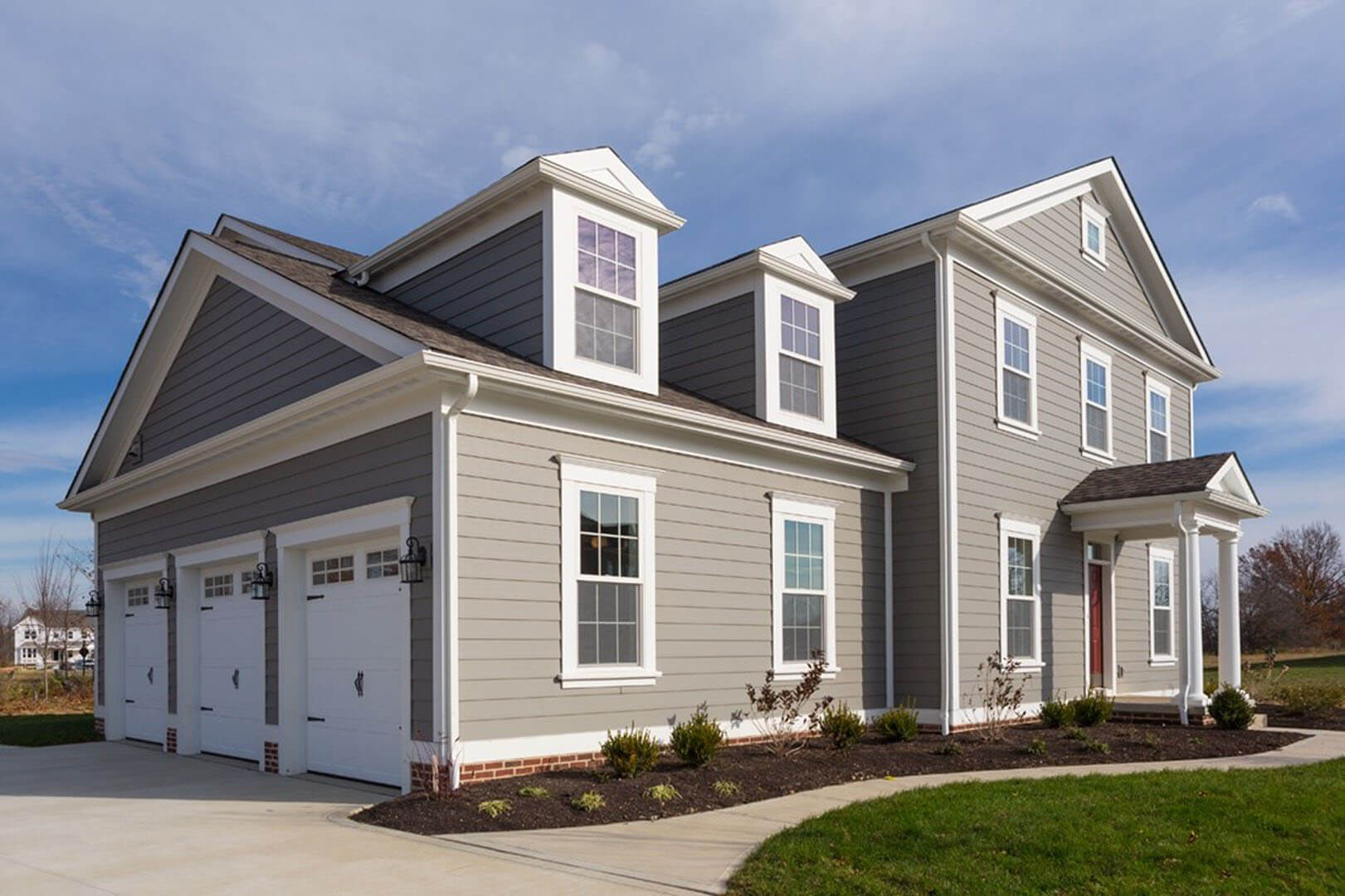
“Low maintenance” is one of those phrases that gets overused in home improvement. Still, when it comes from a manufacturer describing a product line, it gives homeowners a fair expectation of the product’s intent. James Hardie describes its siding as a low-maintenance exterior option, and its ColorPlus finishes are positioned to keep looking good without excessive upkeep.
That matters more in real life than it might seem during the shopping phase. Most homeowners do not mind some maintenance. What they want to avoid is frequent, nagging maintenance. There is a big difference between occasional care and a material that constantly reminds you it needs something.
Sacramento’s bright sun can be unforgiving on exterior finishes. A siding product that is designed with long-term appearance in mind makes the ownership experience easier. That does not mean zero effort forever. No exterior product is truly no-effort. Dust settles, landscaping brushes walls, and caulking around trim still deserves attention. But homeowners usually appreciate a material that is not asking for excessive upkeep just to remain presentable.
I have found that this matters especially to busy families and to owners of rental properties. They are not always chasing a perfect showcase finish. They want the home to look clean, well-kept, and solid without becoming another recurring project.
Why siding and windows should be discussed together
Even when the starting question is siding, the best exterior projects often widen to include windows. A good window and siding contractor will usually bring that up, not because every house needs both at once, but because the two systems affect comfort, energy use, appearance, and installation sequencing.
Sacramento is a strong example of why that broader view helps. ENERGY STAR notes that window performance criteria are based on NFRC ratings and vary by climate zone, which means product selection should match local climate. In a place with long, hot, dry summers, cooling-focused performance matters. Lower solar heat gain can help block heat from sunlight, which is exactly the kind of issue Sacramento homeowners feel in rooms that bake in the afternoon.
This does not mean siding and windows do the same job. They do not. But if someone is opening up the exterior for a major renovation, it makes sense to ask whether old windows are also working against the home’s comfort and operating costs. Sacramento appears in ENERGY STAR city savings estimates, and the numbers are concrete enough to get a homeowner’s attention. Replacing existing windows with ENERGY STAR windows is estimated to reduce annual heating and cooling costs by about $313 for single-pane clear windows and about $105 for double-pane clear windows in Sacramento. Nationally, ENERGY STAR says certified windows, doors, and skylights can cut heating and cooling bills by up to 13 percent compared with non-certified products.
Those numbers are about windows, not siding. Still, they matter in this conversation because exterior upgrades are often timed together. If you are investing in the shell of the house, that is the moment to think like a whole-house planner instead of a one-product shopper.
Fiber cement works well when curb appeal matters, but durability matters more
A lot of siding decisions begin with style. That is natural. Homeowners want the house to feel updated, cared for, and fitting for the neighborhood. Fiber cement can absolutely support that goal. But in Sacramento, its strongest case is usually that it does not force a trade between looks and practicality.
There is a comfort in choosing a product that can serve both aims. People do not want their house to look purely utilitarian, and they do not want a beautiful finish that becomes fragile under real conditions. Fiber cement sits in that middle ground in a way many homeowners find reassuring.
That becomes especially relevant on homes with strong sun exposure on the front elevation. A nice-looking exterior has to survive being looked at in harsh daylight. Every flaw gets amplified in direct sun. So do maintenance gaps. A product intended to keep looking good with less upkeep is not just a convenience. It protects the visual investment.
Where homeowners should slow down before choosing
Fiber cement siding may be a strong fit for Sacramento, but good decisions usually come from asking where the fit is imperfect, not just where it is appealing.
The first trade-off is that no siding material solves a bad design or installation plan. If water is directed poorly around openings, or if the broader exterior details are weak, a good product can still be let down by the system around it. That is one reason experienced homeowners tend to focus as much on the installer as the material.
The second trade-off is that homeowners sometimes expect one exterior upgrade to fix every comfort complaint in the house. Siding can improve protection and appearance, but if a home also has older windows that admit a lot of solar heat, the comfort story is incomplete. In Sacramento, where summer heat can dominate the indoor experience, window performance deserves real attention. Lower solar heat gain and climate-appropriate NFRC-rated products are not technical trivia. They shape how rooms feel.
The third trade-off is regulatory and product-selection complexity. California’s Building Energy Efficiency Standards are part of Title 24, Part 6, and the California Energy Commission provides climate-zone tools to support compliance. That comes into play more directly with windows and energy-related work, but it is another reason whole-exterior projects benefit from experienced guidance. Homeowners do not need to become code experts overnight. They do need to know that not every product decision is plug-and-play.
Signs fiber cement is probably a good match for your home
- You want an exterior material that is described by manufacturers as resistant to moisture and rot.
- Fire performance is an important part of your decision-making.
- You prefer a lower-maintenance exterior rather than one that demands frequent attention.
- Your house sees intense summer sun and you want materials chosen with Sacramento conditions in mind.
- You are already thinking about a broader exterior upgrade and may also evaluate windows.
That list does not settle the decision by itself, but it points toward the kind of homeowner who tends to be happiest with fiber cement after the project is done.
The Sacramento homeowner’s practical checklist
The best exterior projects usually come from clear priorities, not from chasing every feature at once. If I were talking to a Sacramento homeowner trying to sort through siding options, I would steer the conversation toward a few grounded questions.
First, what is driving the project right now? If the answer is mostly appearance, fiber cement can still be a good fit, but the conversation should stay honest about what you are paying for. If the answer includes reducing upkeep, improving resilience, or choosing materials with better fire-related characteristics, the case gets stronger.
Second, are the windows part of the story? Many homeowners replace siding because the whole exterior feels dated, and then realize the windows are doing much of the visual aging. Beyond appearance, Sacramento’s climate makes window performance worth studying. ENERGY STAR criteria vary by climate zone for a reason. Lower solar heat gain can be especially relevant where sunlight adds real indoor heat load.
Third, is the contractor looking at the home as a system? A capable window and siding contractor should be comfortable discussing how siding, trim, flashing, windows, and climate-aware product choices connect. That broader mindset often separates a durable upgrade from a cosmetic one.
Fourth, are you comparing products in a realistic way? Not every benefit has Best Exteriors in Sacramento the same weight. Some homeowners care deeply about fire characteristics. Others are mostly trying to escape high-upkeep exteriors. Others are planning to stay in the home long enough that a stable, lower-maintenance finish has obvious value. The right answer depends on which of those is actually true for your household.
Why this choice tends to age well in Sacramento
Some remodeling decisions feel exciting on installation day and annoying two years later. Others become quietly satisfying because they keep doing their job without demanding attention. Fiber cement often falls into that second category for Sacramento homes.
That is partly because the local climate rewards practical choices. Long hot summers have a way of stripping the romance out of high-maintenance exterior materials. Homeowners start caring less about novelty and more about steadiness. They want the house to look good in July, not just right after the crew leaves.
It is also because the biggest advantages of fiber cement are not fleeting trends. Moisture and rot resistance, lower maintenance positioning, and non-ignition under direct flame exposure, as described by a major manufacturer, are durable reasons to choose a cladding product. Those are not fashion points. They are ownership points.
And when a project includes windows as well, the long-term value story can improve further. In Sacramento, where summer cooling matters, climate-appropriate ENERGY STAR windows may help reduce annual heating and cooling costs, with local estimates showing meaningful savings depending on what is being replaced. That does not make siding an energy product. It does show why thoughtful exterior planning often pays off more than piecemeal decisions.
A sensible fit, not a magical one
The strongest case for fiber cement siding in Sacramento is not that it is perfect. It is that it is sensible.
It suits a climate with long, hot, dry summers. It appeals to homeowners who want lower-maintenance exteriors. It offers fire-related characteristics that many California homeowners take seriously. It is also easy to pair with a broader exterior strategy that includes windows chosen for local performance needs, especially where solar heat gain is a concern.
That practical fit is what makes it stand out. A Sacramento home does not need a flashy exterior material. It needs one that makes sense after the first summer, and the fifth, and the years when nobody wants to think about the siding at all. Fiber cement has a way of earning its place in that kind of long-term, real-world calculation.